
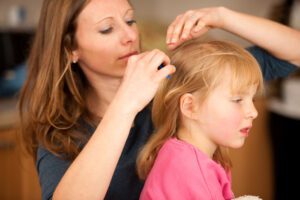
 As a pediatric specialist, Beach Kids Pediatrics is no stranger to questions about head lice. This common parasite is often seen in young children and tweens who spend time in a group setting. It’s important to remember that head lice are incredibly common and can occur in any family. Our expert providers want to share information about head lice in case it happens to your child!
What You Should Know About Lice
Lice is a small, obligate ectoparasite of the human body that causes head lice infestations. Head lice do not have wings, therefore they lodge themselves on the scalps of humans where they spend their entire life as a parasite. They cause small, tiny sores on the head as they feed on human blood. These little creatures are also hard (but not impossible) to spot. They are anywhere between about 0.25 – 0.30 cm in size and they multiply on the scalp rapidly. This causes a total infestation without appropriate treatment.
What’s Important to Know When Treating Lice?
Lice are not harmful to someone’s immediate health and they do not spread diseases or other viruses. However, if head lice are left untreated their little microscopic bites could become infected from excessive scratching, picking, and itching. This is especially true in children who do not understand why not to pick at these sores. Lice can be a nuisance, but there is a way to get rid of head lice if you, your child, or someone you know gets them.
How Do I Know Someone Has Lice?
Although lice are tiny, they are visible to the naked human eye. They will be tiny little specks that appear to be to be tiny tan, yellow, or white dots before they hatch into lice. The lice will be born closest to the shaft of the hair that are attached to the scalp as that is where they feed and receive nourishment from. Lice eggs will hatch within 1 to 2 weeks after they are initially laid. The lice, once hatched, will move and crawl across the scalp.
What Are the Symptoms of Lice?
Lice will cause the person to constantly feel the need to scratch their head, even if they already took a shower or bath and are clean. If lice is around for any period of time there will be little raised, red bumps from irritation where the lice bit and penetrated the skin.
The Contagion Problem With Lice
The biggest nuisance that lice present is that they are contagious. They are easily spread from one person to another, especially in group settings. This makes them especially rampant in places like schools, daycares, at slumber parties, or even in camp settings. These lice can also spread from places like locker rooms where everyone is in close quarters together. One person having lice can spread to everyone having lice.
Another reason lice is often spread is due to sharing personal items that are associated with the scalp. This is especially true of things like shampoos, hair ties/ornaments, hats, or hair brushes. This is why you have always been told to not share such personal items. You will almost guaranteed end up with it also!
How Do I Treat Head Lice?
Lice are easily treated through many over-the-counter products that are safe for anyone over the age of 2-3 months. Most of these treatments are shampoos that are available to kill off the lice. Several treatments may be needed to kill off the lice, depending on the product and severity of the infestation.
Also, keep the following in mind when you are getting rid of lice, as they can live on a variety of things that the head has contact with:
- Wash all bed linens used recently in water that is at least 130 degrees Fahrenheit to ensure all lice are killed off that may potentially infest the sheets.
- Anything that cannot be washed should go to the dry cleaners or put into airtight bags for a minimum of 3 days.
- Vacuum all upholstery and carpeting within the home that may have come in contact with the lice. Be sure to throw out the vacuum bag afterwards as the lice may continue to live in the bag.
- Soak all haircare items (I.e. combs, brushes, hair ties, headbands, etc.) in rubbing alcohol and medicated shampoo for at least 1 hour. This will ensure all lice are killed off and cannot reenter the scalp when the hair care products are used again.
Conclusion
At this point, all the lice should be gone and the individual should be lice-free. Just keep in mind that if someone in the house has lice, you should treat the entire household for it before it can spread. Lice, while relatively harmless, can spread rapidly and be quite a nuisance to everyone in the household.
If you are unsure of how to treat your child’s head lice infestation, or if you have questions about whether or not your child actually has head lice, Beach Kids Pediatrics can help. Contact us for an appointment at (757) 806-8880.